
Travel
Hike to Geldingadalir Volcano, Reykjanes Guide
Embark on a thrilling hike to Geldingadalir shield volcano eruption site on the Reykjanes Peninsula, and witness Iceland’s raw beauty firsthand.


Embark on an unforgettable adventure as you hike to the mesmerizing Geldingadalir shield volcano eruption site on the Reykjanes Peninsula in Iceland. This awe-inspiring natural phenomenon has captured the world’s attention with its repeated eruptions, providing a unique opportunity to witness the raw power of nature up-close.
A few kilometers northeast of the coastal town of Grindavik, the Geldingadalir volcano has erupted for the fourth time in just three months, making it the most powerful eruption to date. As molten lava flows south and southeast, you’ll have the chance to hike along the Geldingadalir hiking trail, offering panoramic views of the breathtaking lava flows and rugged landscapes.
While the recent volcanic activity has necessitated safety measures, such as the evacuation of residents from Grindavik, it’s important to note that Keflavik International Airport, located 20 kilometers north of the eruption site, remains operational, ensuring convenient access for travelers.
As you embark on this adventure, you’ll encounter a fascinating natural spectacle of lava flowing at a remarkable rate, revealing the raw energy of the Earth’s core. Witness the immense defensive barriers erected to protect the main road along the peninsula’s southern coast from the lava’s path, a testament to Iceland’s preparedness and resilience in the face of volcanic activity.
Key Takeaways:
- Embark on a hike to the Geldingadalir shield volcano eruption site on the Reykjanes Peninsula in Iceland.
- Experience the awe-inspiring power of nature as you witness the repeated eruptions of the Geldingadalir volcano.
- Explore the Geldingadalir hiking trail and marvel at the panoramic views of the lava flows and rugged landscapes.
- Appreciate the safety measures implemented to protect both residents and infrastructure.
- Witness the remarkable defensive barriers erected to safeguard the main road along the peninsula’s southern coast.
Duration and Impact of the Volcano Eruption
The eruption of the Geldingadalir shield volcano in Iceland’s Reykjanes Peninsula has captivated the world with its raw power and awe-inspiring display of nature’s forces. This volcanic event, which began recently, continues to mesmerize onlookers with its mesmerizing lava flows and explosive eruptions. While the duration of the eruption remains uncertain, its impact on the surrounding area and local communities cannot be overlooked.
The lava flow from the Geldingadalir eruption is currently moving south and southeast, gradually inching its way towards the ocean. As a precautionary measure, defensive barriers have been constructed to safeguard the main road along the peninsula’s southern coast, preventing the lava from causing destructive flooding.
However, the eruption has prompted the evacuation of residents in the vicinity and led to the closure of several tourist attractions, including the world-famous Blue Lagoon thermal spa. The safety of both locals and visitors remains a top priority, necessitating temporary closures and restrictions to ensure their well-being.
While the Geldingadalir eruption is undoubtedly a natural spectacle worth witnessing, it is crucial to remember that it is not a tourist attraction. Authorities advise visitors to observe the eruption from a safe distance and avoid venturing into restricted areas. The power and unpredictability of volcanic activity should be respected, enabling everyone to marvel at its beauty without endangering themselves or others.
The eruption has also resulted in the closure of roads in the vicinity of Grindavik, causing temporary disruption to local transportation. However, the impact on air travel has been minimal, with Keflavik International Airport operating normally and flights proceeding as scheduled.
| Duration of Eruption | Potential Impact |
|---|---|
| The duration of the eruption is uncertain | Possible lava flow damage to infrastructure |
| Evacuation of residents in affected areas | |
| Temporary closure of tourist attractions | |
| Disruption to local transportation |
The Geldingadalir shield volcano eruption serves as a powerful reminder of the raw and untamed nature of our planet. It showcases the perpetual geological processes that shape our world and the resilience of communities in adapting to these natural occurrences.
Safety and Travel Advice
Various European foreign offices advise travelers to stay away from the Grindavik area on the Reykjanes Peninsula, where the Geldingadalir volcano eruption is taking place. It is important for travelers to prioritize their safety and stay informed about the latest developments. To stay up-to-date, it is recommended to regularly check the Icelandic Meteorological Office and Safe Travel Iceland websites for the latest safety advice and updates regarding the volcanic activity in Iceland.
Despite the eruption, Iceland as a whole remains a safe destination for travel. The capital city of Reykjavik and the rest of the country are unaffected by the volcanic activity on the Reykjanes Peninsula. Flights to and from Keflavik International Airport, the main international airport in Iceland, continue to operate normally. As such, travelers can still enjoy other attractions and experiences in the country while taking necessary precautions.
It is important to note that the volcanic eruptions in the Reykjanes Peninsula are localized to specific areas and have not caused major disruptions to air travel like the eruption of the Eyjafjallajokull volcano in 2010. Icelandic authorities closely monitor and manage the volcanic activity to ensure the safety of residents and visitors. However, it is essential for travelers to adhere to the guidance of local authorities, respect any road closures, and comply with area restrictions for their own safety.
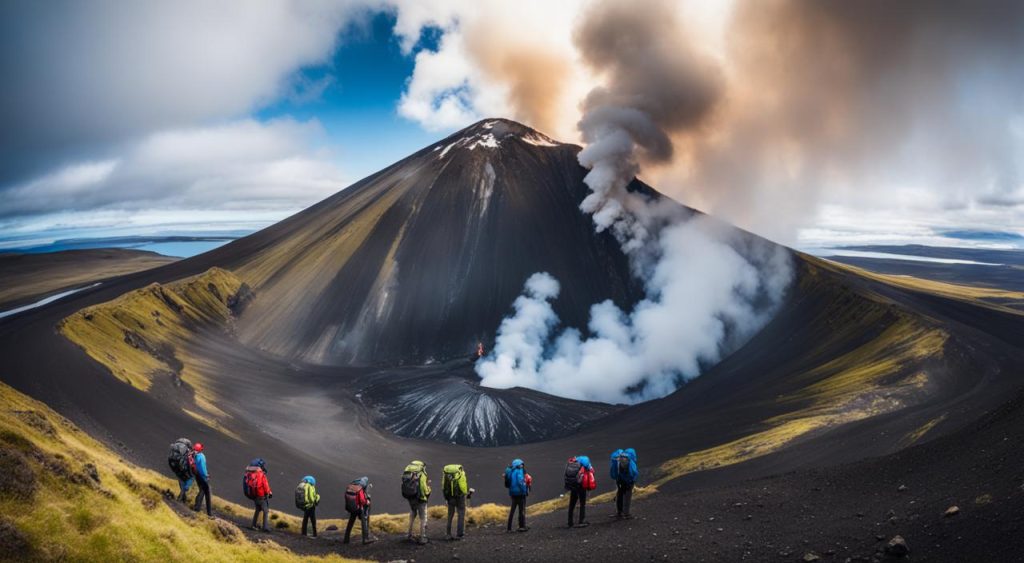
Travelers are advised to:
- Regularly check the Icelandic Meteorological Office and Safe Travel Iceland websites for the latest safety advice.
- Follow the guidance of local authorities regarding road closures and area restrictions.
- Stay away from the Grindavik area on the Reykjanes Peninsula where the volcano eruption is taking place.
- Take necessary precautions while visiting other parts of Iceland, even though they are unaffected by the volcanic activity.
“Safety should always be the top priority when traveling, especially in areas with ongoing volcanic activity. By staying informed, following the advice of local authorities, and respecting any restrictions, travelers can still enjoy a safe and memorable trip to Iceland.”
| Travel Safety Tips | Key Takeaways |
|---|---|
| Regularly check the Icelandic Meteorological Office and Safe Travel Iceland websites for safety updates. | Stay informed about the volcanic activity and any potential safety hazards. |
| Follow the guidance of local authorities regarding road closures and area restrictions. | Ensure compliance with safety measures and regulations for personal well-being. |
| Avoid the Grindavik area on the Reykjanes Peninsula where the volcano eruption is taking place. | Minimize exposure to potential volcanic hazards and maintain personal safety. |
| Take necessary precautions while visiting other parts of Iceland, even though they are unaffected by the volcanic activity. | Enjoy the beauty and attractions of Iceland while prioritizing personal safety. |
Previous Volcanic Eruptions in Reykjanes
The Geldingadalir volcano eruption is not the first volcanic activity to occur in the Reykjanes Peninsula in recent years. In March 2021, a volcanic eruption occurred at the Geldingadalur valley in the Fagradalsfjall volcanic system, marking the beginning of increased volcanic activity in the region after being dormant for over 800 years. Subsequent eruptions occurred in Meradalir valley in August 2022 and at Litli-Hrútur in July 2023.
Each eruption was contained in remote areas, causing minimal impact on nearby communities and infrastructure. Once the volcanoes were deemed safe, locals and visitors were allowed to witness the awe-inspiring spectacle of nature’s power. The Icelandic authorities and scientists closely monitor volcanic activity in the area, employing advanced technology and expertise to gain insights into the behavior and patterns of the earth’s fiery eruptions, ensuring the safety of the population and visitors alike.
| Volcano | Eruption Date |
|---|---|
| Geldingadalur | March 2021 |
| Meradalir | August 2022 |
| Litli-Hrútur | July 2023 |
These eruptions serve as a testament to the volatile nature of the earth’s geology, highlighting the intricate and captivating processes that shape our planet. The rich history of volcanic activity in Reykjanes Peninsula attracts scientists, researchers, and nature enthusiasts who seek to understand and appreciate the raw power and beauty of these geological phenomena.
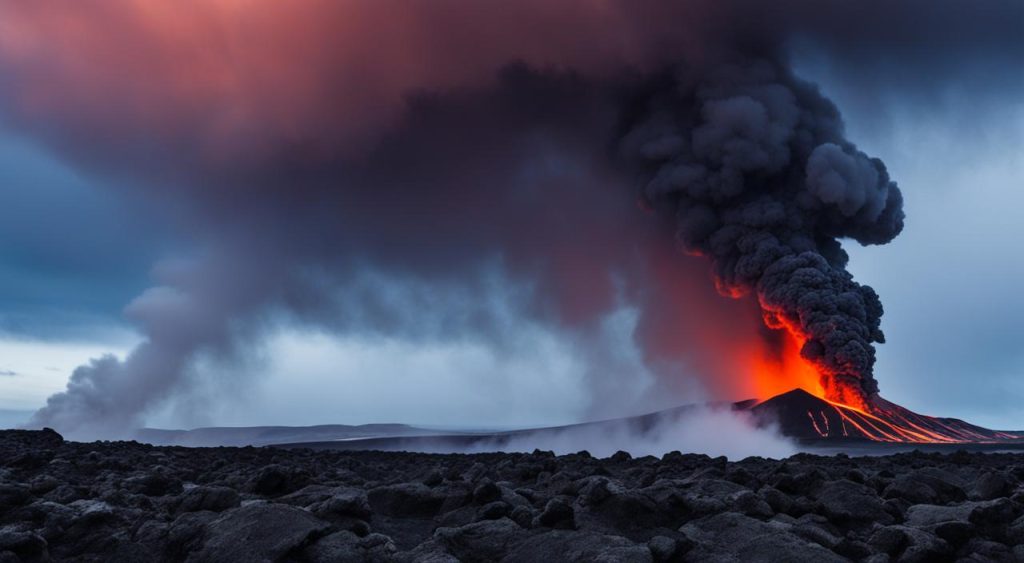
The image above showcases the mesmerizing landscapes that emerge from volcanic eruptions in Reykjanes. The contrast between the rugged volcanic terrain and the lush surrounding landscapes creates a captivating visual spectacle. It is a reminder of the forces that shape our world and the constant evolution of our planet.
Impact on Air Travel
The eruption of the Geldingadalir shield volcano on the Reykjanes Peninsula is not expected to have a significant impact on air travel. Unlike the 2010 eruption of the Eyjafjallajokull volcano, which caused widespread disruption to flights in Europe, the recent eruptions in the Reykjanes Peninsula do not produce large amounts of volcanic ash that can pose a hazard to aircraft engines and flight control systems.
Keflavik International Airport, the main international gateway to Iceland, remains open and operational, with flights arriving and departing as scheduled. Travelers can continue to plan their trips to Iceland without major concerns about flight disruptions due to volcanic activity in the area.
However, it is always advisable for travelers to stay informed and check with their airlines for the latest information on their flights. Airlines have robust procedures in place to monitor volcanic activity and adjust their flight paths if necessary to ensure the safety of passengers and crew.
Flight Safety Measures
When flying during or after a volcanic eruption, airlines take several precautions to maintain the safety of air travel:
- Collaboration with meteorological agencies and volcanic observatories to monitor ash clouds and other potentially harmful volcanic materials.
- Installation of aircraft monitoring equipment, including ash detectors and radar systems, to help identify and avoid volcanic ash concentrations.
- Evaluation of the severity and density of the volcanic ash to determine appropriate flight paths and altitudes.
- Close communication and coordination with air traffic control and other airlines to share information and ensure the safest and most efficient routes for flights.
These safety measures, along with the specific characteristics of the Geldingadalir volcano eruption, minimize the impact on air travel and allow flights to Iceland to operate smoothly.
Please note that the image above is for illustrative purposes only and does not represent the actual impact on air travel caused by the Geldingadalir volcano eruption.
Safety Measures and Precautions
During volcanic eruptions on the Reykjanes Peninsula, the Icelandic authorities have implemented various safety measures and precautions to ensure the well-being of residents and visitors. Local residents in affected areas have been evacuated promptly to safeguard their safety and prevent any potential harm. It is crucial for tourists to prioritize safety and adhere to any closures, road restrictions, or area prohibitions put in place by the authorities.
When traveling to volcanic areas, it is essential to be aware of and prepared for potential risks. Here are some safety measures to consider during volcanic eruptions:
- Stay informed about the latest updates and advisories from reliable sources, such as the Icelandic Meteorological Office and Safe Travel Iceland.
- Follow the guidance provided by local authorities and respect any road closures or area restrictions.
- Avoid entering restricted areas, as volcanic eruptions can lead to hazardous conditions, including falling ash, gas emissions, and unpredictable lava flows.
- Keep a safe distance from the eruption site, as flying debris and intense heat can pose significant risks.
- Carry an emergency kit that includes essential items such as a flashlight, first aid supplies, extra food and water, and appropriate clothing.
- If you experience respiratory problems or any other health issues due to volcanic activity, seek medical assistance immediately.
“Safety is paramount during volcanic eruptions. It is crucial to stay informed, follow instructions from authorities, and prioritize personal safety. Volcanic areas can be captivating, but it is essential to maintain a safe distance and respect any restrictions to ensure a secure and memorable experience.”
Travel Insurance During Volcanic Eruptions
When planning a trip to destinations prone to volcanic activity, it is recommended to have travel insurance that includes coverage for unforeseen events, including volcanic eruptions. However, it’s important to note that travel insurance policies purchased after the eruption becomes a known event may not provide coverage for disruptions or expenses related to the volcanic activity.
Travelers should carefully review their policy’s wording and speak with their insurance provider to understand the extent of coverage during volcanic eruptions. It is advised to inquire about specific coverage for trip cancellations, delays, medical emergencies, and evacuation expenses related to volcanic activity. For travelers who have not yet purchased travel insurance, it is crucial to consider policies that provide comprehensive coverage, including protection during volcanic eruptions.
It’s essential to stay up-to-date with the latest information and guidance from the Icelandic authorities, insurance providers, and travel advisories to make informed decisions regarding travel plans and insurance coverage.
| Safety Measures | Precautions |
|---|---|
| Stay informed through reliable sources | Follow guidance from local authorities |
| Respect road closures and area restrictions | Avoid entering restricted areas |
| Keep a safe distance from the eruption site | Carry an emergency kit |
| Seek medical assistance if needed |
By following these safety measures and being adequately prepared, travelers can navigate volcanic eruptions with caution and ensure their well-being during their visit to the Reykjanes Peninsula.
Visit to the Blue Lagoon
As a precautionary measure, the Blue Lagoon geothermal spa, one of Iceland’s top tourist attractions, has been temporarily closed due to the volcanic eruption in the nearby area. The closure is in place to ensure the safety of visitors and protect the infrastructure of the Blue Lagoon from potential lava flows. Customers with bookings are being notified and given the option to change or cancel their reservations.
The Blue Lagoon management is closely following the guidelines and recommendations of the authorities and will provide updates on the situation. Travelers are advised to check the official Blue Lagoon website for the latest information.
In the meantime, let’s take a moment to appreciate the beauty of the Blue Lagoon. Its crystal-clear, geothermal waters set against a backdrop of rugged volcanic landscape create a truly unique and rejuvenating experience. The Blue Lagoon’s mineral-rich waters, renowned for their healing properties, offer a soothing and relaxing retreat for travelers from all over the world.
Further Information and Resources
For up-to-date volcanic eruption information and essential resources to stay informed during your travels in Iceland, there are several official sources you can rely on. The Icelandic Meteorological Office provides comprehensive data on seismic activity and the latest developments of volcanic events. Stay informed about road conditions and closures in the Reykjanes region by checking updates from the Icelandic Road Administration. Safetravel is a valuable resource for updates on safety measures and regulations to ensure a secure journey. Keep yourself well-informed with news coverage and updates from the Icelandic National Broadcasting Service and Visit Reykjanes.
By accessing these reliable resources, you will be able to gather all the necessary knowledge to make informed decisions and have a safe and unforgettable travel experience. Whether you’re an adventure seeker, a nature enthusiast, or simply seeking tranquility, Iceland offers a diverse range of attractions and landscapes. From majestic waterfalls to breathtaking glaciers, volcanoes play an essential role in shaping the unique beauty of this country. Embrace the wonder of nature while adhering to local guidelines and following the advice of experts to make the most of your Icelandic adventure.
Iceland’s mesmerizing volcanic eruptions provide a captivating spectacle that reminds us of the Earth’s raw power and its ever-evolving nature. However, it’s crucial to prioritize safety and stay informed about volcanic activity. Remember to review information from official sources regularly as conditions may change. By staying connected to these resources, you can plan your journey accordingly, adapt your itinerary if needed, and ensure a smooth and enjoyable adventure in Iceland, the land of fire and ice.