Skin Texture Improvement
Radiant Skin: Tips to Improve Skin Texture
Many people dream of smooth and glowing skin. It’s often the first step to looking great, whether aiming for a simple or fancy style. This guide will lead you through steps to make your skin feel as good as it looks.
We’re using tips from skin experts and trustworthy research. They’ve recommended the best ways to achieve radiant skin.
Say Goodbye to Indoor Tanning
Indoor tanning was once trendy, but now we see it as dangerous. It can hurt our skin and health. Many go to tanning beds wanting a tan but don’t know the risks.
Tanning indoors raises the chance of getting skin cancer. It happens because the UV rays are very strong. These rays go deep into the skin, harming it and causing cancer. We should choose other ways to tan to stay safe from this type of cancer.
“Indoor tanning exposes the skin to ultraviolet radiation, which is a known human carcinogen. It can damage the DNA in skin cells, causing mutations that lead to skin cancer.” – American Academy of Dermatology
UV rays make us look older. They cause wrinkles and make the skin texture rough. Tanning too much indoors can give us spots and make our skin look tired. We should find better ways to get a nice tan without using tanning beds.
There are many products we can use instead of tanning beds. Sunless tanners are a good choice. They make our skin look brown without UV harm. You can find lotions, sprays, and more to fit what you like and what is good for your skin.
It’s important to keep our skin safe from the sun, too. Using things like sunscreen and wearing the right clothes can help. Even if we don’t tan indoors, the sun can still hurt us. Sunscreen not only stops cancer but also keeps our skin looking and feeling young.
We should stop indoor tanning and choose better ways to look good. Safety and beauty go hand in hand. Let’s protect our skin and stay away from indoor tanning. We can be beautiful and healthy without it.
| Concerns with Indoor Tanning | Safer Alternatives |
|---|---|
| Increases the risk of skin cancer | Use sunless tanning products |
| Accelerates skin aging | Practice sun protection measures |
| Results in uneven skin texture | Seek shade and wear protective clothing |
| Contributes to dark spots | Apply broad-spectrum sunscreen |
| Causes a dull complexion |
Establish a Skincare Routine
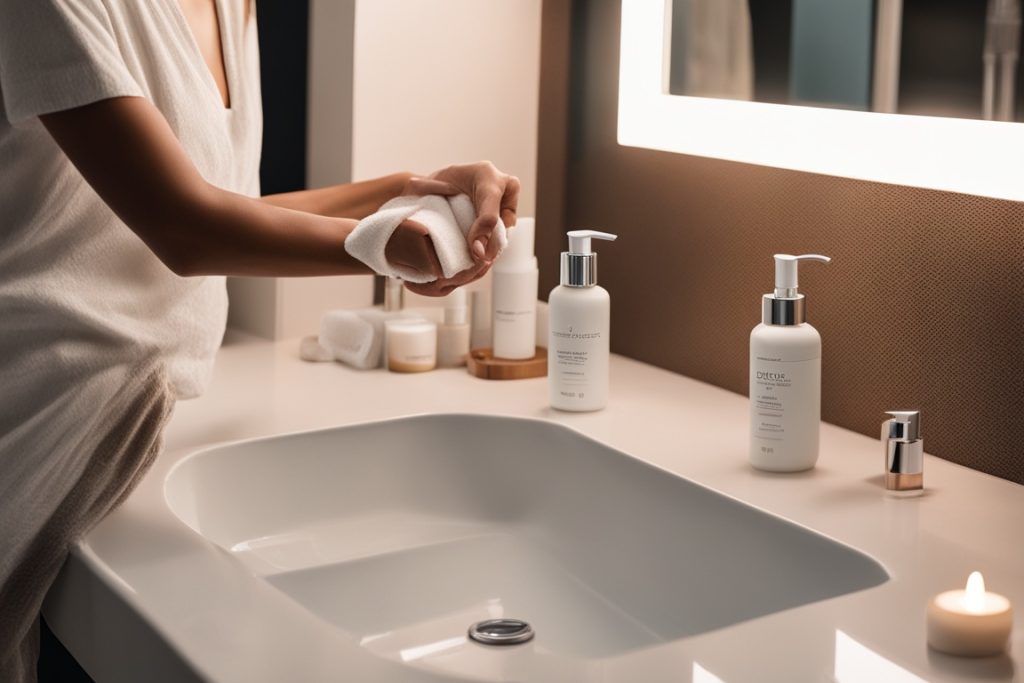
A good skincare routine can make your skin look better. You need to do certain things every morning and night. This helps your skin stay healthy and glowing. Now, let’s dive into what you should do for your skin.
Cleansing
Cleaning your face is a must. It gets rid of dirt, oil, and impurities. These can block your pores and cause your skin to feel rough. Cleanse with a good product both in the morning and at night.
Use a mild cleanser in the morning. Use a stronger one at night to make sure your face is clean from any dirt.
Morning Routine
Getting your morning skin plan ready is vital. It helps your skin stand tough against the day’s harms. Follow these steps each morning:
- Face Cleansing: Start with a gentle cleanser to clear out overnight gunk.
- Vitamin C Serum: Next, add a serum with vitamin C to fight wrinkles and even skin tone.
- Moisturizer with Sunscreen: Finish off with a moisturizer that also has sunscreen to block UV rays.
Evening Routine
At night, focus on helping your skin repair and renew. Here’s what you should do:
- Exfoliation: Use something gentle to scrub away dead skin cells. This helps new skin grow.
- Retinoid Products: These can make your skin more elastic because they boost collagen.
- Nourishing Moisturizer: End your night routine with a thick moisturizer to deeply hydrate your skin.
Doing these routines daily, along with regular cleansing, helps your skin feel smooth. Always pick products that work for your skin type. If you have special skin worries, talk to a skin doctor to get the best advice.

| Key steps | Benefits |
|---|---|
| Face Cleansing | Removes dirt, oil, and impurities; prevents clogged pores |
| Morning Routine | Protects skin from environmental stressors; reduces wrinkles and evens skin tone |
| Evening Routine | Promotes skin repair and rejuvenation; stimulates collagen production |
Protect Your Skin from the Sun
Sun damage leads to skin problems like a dull look, uneven tone, and fine lines. It is key to keep your skin safe from harmful UV rays for a glowing complexion.
Stay in the shade during the sun’s peak times to avoid too much sun. Also, wear clothes that cover a lot, like wide hats and long shirts, for more protection.
Make sure to use a good sunscreen, SPF 30 or higher, to shield your skin. Put it on every part of your body that’s not covered, and don’t forget to reapply. Do this every two hours, more often if you swim or sweat.
Using sunscreen often helps lessen aging signs from the sun, like wrinkles and discoloration. Taking care of your skin against the sun keeps it looking young and smooth.
Your whole body needs sun defense, not just your face. Key spots like shoulders, back, and legs can easily get sunburned. Use sunscreen on these areas whenever you’re out in the sun for a while.
Keep your skin safe from harm by seeking shade, wearing protective clothes, and using sunscreen a lot. Remember to cover every part of your body, especially the exposed parts. Stay safe from the sun for a glowing skin!
| Benefits of Sun Protection | Consequences of Sun Damage |
|---|---|
|
|
Consult a Dermatologist
Seeing a dermatologist regularly helps keep your skin healthy and addresses any issues. Dermatologists specialize in the skin, hair, and nails. They know how to spot and take care of skin problems with expert advice.
Getting a full body skin examination from a dermatologist is very beneficial. They look for skin issues, including the beginning signs of skin cancer. Finding skin cancer early means you can get better and quicker treatment.
Dermatologists can also give advice just for your skin’s needs. They check your skin type and why you may have issues with texture. They create a plan just for you, whether you need help with acne, dry skin, wrinkles, or an uneven tone.
Staying in touch with your dermatologist makes sure you keep your skin healthy. They help you look for any changes in your skin and tweak your treatments as needed. Working with them teaches you how to care for your skin properly and gives you top-notch skin care.
Why Consult a Dermatologist?
A dermatologist is the best resource for addressing skin texture concerns and maximizing the health of your skin.
If everyday products or tips at home don’t help with skin issues, seeing a dermatologist is key. Serious acne, very dry skin, or strong signs of aging might need a pro’s touch for better results.
When picking a dermatologist, aim for someone certified with good experience and reviews. It’s good to get advice from people you trust or your family doctor. Choosing the best one guarantees you get great care and the results you want.
Want to care more for your skin or need to check it often? It’s a good idea to make an appointment with a dermatologist. Acting early to care for your skin leads to a healthy and glowing look.
| Dermatologist Benefits | Why Choose a Dermatologist? |
|---|---|
| Expert knowledge and experience | Specialized training in diagnosing and treating skin conditions |
| Full-body skin examination | Early detection of skin cancer and other abnormalities |
| Personalized skin recommendations | Tailored treatment plans based on individual needs |
| Ongoing care and monitoring | Long-term support in achieving skincare goals |
Targeted Solutions for Uneven Skin Texture
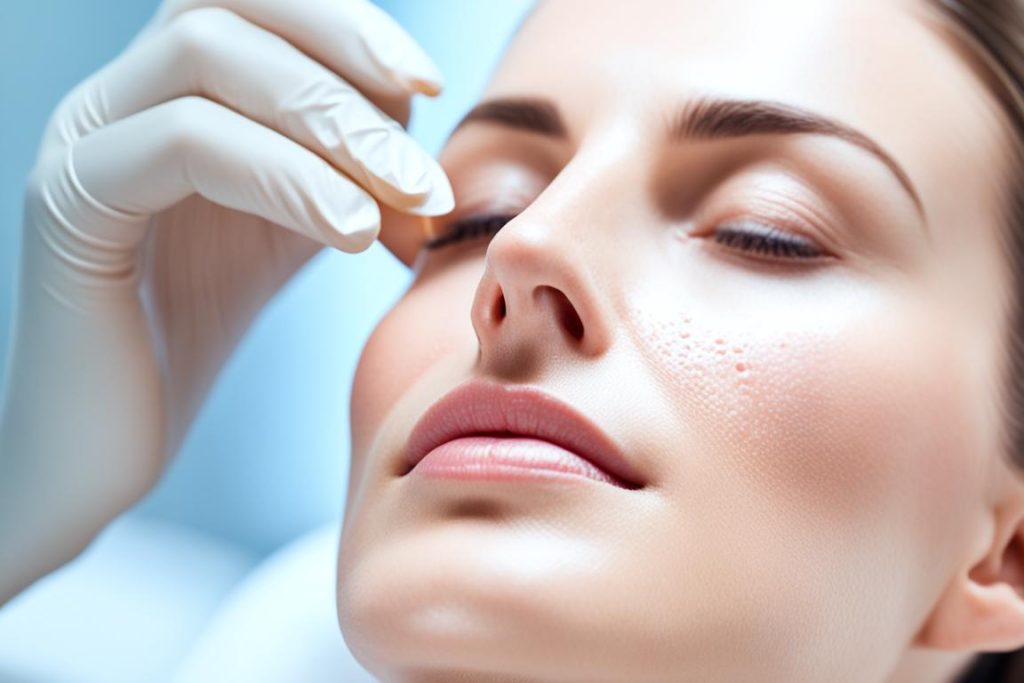
Many people worry about their skin not feeling smooth. But, the good news is there are ways to make your skin look smoother and more glowing. You can tackle rough skin by exfoliating, using moisturizers, applying retinol, and getting help from skin professionals.
Exfoliation for Smoother Skin
Exfoliating means getting rid of dead skin. Your skin then looks and feels better. This can be done through physical or chemical ways.
Physical ways include using scrubs or brushes. They remove dead skin by rubbing. Make sure the exfoliants are soft to avoid harming your skin.
With chemical exfoliation, special acids like AHAs and BHAs help. They break the bonds between dead skin cells. This means it’s easier to remove them. AHAs are good for the skin’s surface. BHAs are great for deep cleaning your pores.
Moisturizers for Even Tone and Texture
Keeping your skin moisturized is key for it to look and feel good. Look for moisturizers that have niacinamide for rough skin.
Niacinamide is a type of vitamin B3. It helps keep the skin healthy. It makes the skin tone even and the texture smooth. Adding it to your routine can make a big difference.
Retinol for Fine Lines and Wrinkles
Retinol fights signs of aging. It’s good for making your skin texture better. It does this by boosting collagen and reducing lines.
Using retinol starts with lighter creams and then move up. Always follow the product’s advice. If you’re unsure, check with a skin doctor.
In-Office Treatments for Deeper Textural Problems
If the problem is big, you might need professional help. In-office treatments can refresh your skin:
- Fraxel uses a special laser to work on small skin areas. It boosts collagen and touches up scars and rough areas.
- Microdermabrasion is about removing the skin’s top layer gently. It leaves your skin more even and soft.
- Microneedling uses tiny needles to make small skin injuries. This wakes up new collagen and gives your skin a young look.
- Strong peels go deep in your skin. They are good for rougher skin problems like acne scars and sun damages.
These serious skin fixes need to be done by an expert. They understand your skin’s needs and can pick the best treatment.
Using these steps regularly can help make your skin look and feel great. You’ll slowly see a beautiful, glowing you.
Conclusion
You can make your skin look and feel great. Just stick to your skincare plan and use the right products. Also, always protect your skin from the sun. And, talking to a skin doctor can really help.
Keeping your skin healthy is key. Cleanse, exfoliate, and moisturize gently. Plus, always use sunscreen to shield your skin.
With the right effort, you can have beautiful, smooth skin. Use the advice from this guide. Then, see your skin glow and feel great.